In short
Treatment focuses on removing the cause (such as alcohol or viral hepatitis), protecting the remaining liver with diet and lifestyle changes, monitoring for complications, and treating complications like ascites or bleeding when they occur. Liver transplant is the most effective option for end-stage disease. Early diagnosis, consistent monitoring and lifestyle changes play the most important role in quality of life.
Treatment and management options
Treating the underlying cause
Managing alcohol use, fatty liver or viral hepatitis prevents further liver damage.
Anti-inflammatory medications
Medicines prescribed by doctors help reduce liver inflammation and slow scarring.
Diet & lifestyle changes
A liver-friendly diet, avoiding junk food and maintaining a healthy weight improves outcomes.
Low-salt diet
Reducing salt intake helps manage fluid build-up and ascites.
Regular monitoring
Routine tests help detect infections, bleeding or liver cancer early.
Complete alcohol avoidance
Even small amounts of alcohol can worsen liver damage and must be avoided fully.
Antiviral treatment
Antiviral medicines help control hepatitis B and C and prevent progression.
Managing complications
Procedures for bleeding, infections or fluid build-up improve long-term survival.
Liver transplant
The most effective treatment for end-stage cirrhosis, offering long-term recovery.
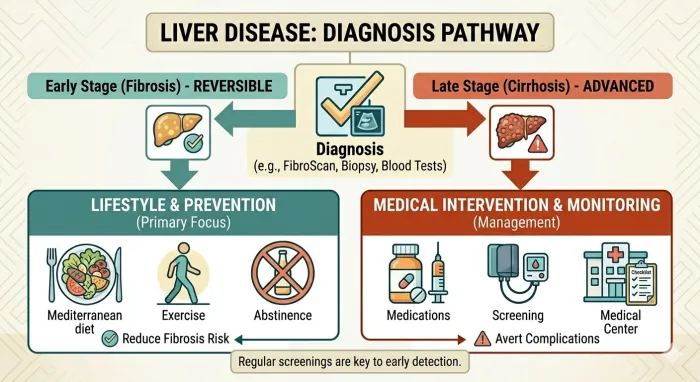
Treatment by stage of scarring
For liver fibrosis
- Eliminate the cause: stop alcohol or start antiviral therapy for hepatitis.
- Lifestyle overhaul: a Mediterranean-style diet and 150 minutes of exercise per week to reduce liver fat.
- Monitoring: regular scans to check the scarring isn’t progressing.
For liver cirrhosis
- Fluid management: low-sodium diets and diuretics (water pills).
- Portal hypertension medicines: beta-blockers to help prevent internal bleeding.
- Cancer screening: ultrasounds every 6 months to catch tumours early.
- Transplant: the final option when the liver can no longer support life.
Managing common complications
| Complication | What it is | Typical management |
|---|---|---|
| Ascites | Fluid build-up in the abdomen | Low-sodium diet, diuretics, drainage (paracentesis) |
| Variceal bleeding | Bleeding from enlarged veins in the oesophagus | Beta-blockers, endoscopic banding; emergency care |
| Hepatic encephalopathy | Confusion caused by toxin build-up | Lactulose and other prescribed treatment |
| Liver cancer risk | Increased risk of hepatocellular carcinoma | Ultrasound screening every 6 months |
Daily self-management
Stop alcohol completely, follow a low-sodium diet, maintain a healthy weight, keep vaccinations for hepatitis A/B, flu and pneumonia up to date, and avoid liver-toxic medicines such as certain painkillers unless your doctor approves them. Always take medicines exactly as prescribed — a medication checklist can help. See the cirrhosis diet guidelines.
If cirrhosis progresses, your team may discuss a liver transplant evaluation.