In short
The main causes of cirrhosis are chronic hepatitis B or C, long-term heavy alcohol use, fatty liver disease and autoimmune conditions. Less common triggers include genetic disorders such as hemochromatosis or Wilson’s disease. Early intervention on these factors can slow progression.
Main causes of cirrhosis
Alcoholic cirrhosis
Long-term heavy alcohol use damages liver cells, causing inflammation and scarring.
Chronic viral hepatitis
Hepatitis B and hepatitis C infections are major global causes of cirrhosis.
Non-alcoholic fatty liver disease (NAFLD)
Common in people with obesity, diabetes and high cholesterol. Now also referred to as MASLD (metabolic dysfunction-associated steatotic liver disease), with its inflammatory form MASH.
Autoimmune liver diseases
The immune system mistakenly attacks healthy liver cells, causing chronic inflammation.
Genetic & metabolic disorders
Conditions such as Wilson’s disease or hemochromatosis damage liver tissue over time.
Toxins & medicines
Long-term exposure to harmful chemicals or certain medications can lead to liver damage.
Cryptogenic cirrhosis
A form of cirrhosis where the exact cause is unknown — a “mystery scar” on the liver. Advanced damage is present but cannot be clearly linked to alcohol, viral infection or a known disease.
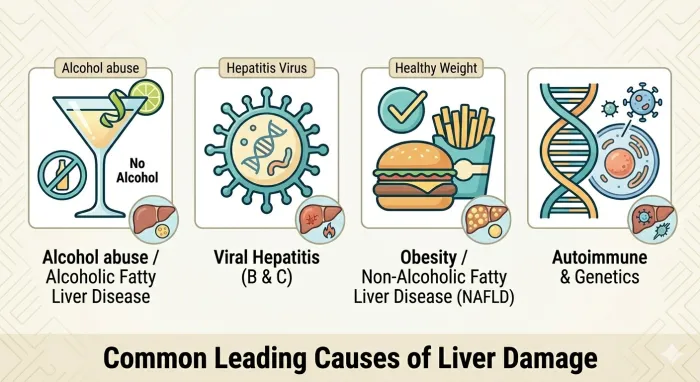
Same triggers, different duration
The triggers for liver fibrosis and cirrhosis are identical; the difference is simply the duration and intensity of the damage. Persistent injury first causes inflammation, then fibrosis (scarring) and, if unchecked, cirrhosis. That is why treating the underlying cause early matters so much. Learn how fibrosis turns into cirrhosis.
Reducing the risk
- Maintain a healthy weight: fatty liver is currently a leading cause of liver transplants in many countries.
- Limit alcohol consumption: practise “dry days” and stick to moderate limits — or avoid alcohol completely if you have liver disease.
- Get vaccinated: hepatitis A and B are preventable through vaccination.
- Safe practices: avoid sharing needles or personal items like razors to prevent blood-borne viruses.
Once cirrhosis is present, doctors describe its progression in four stages.