In short
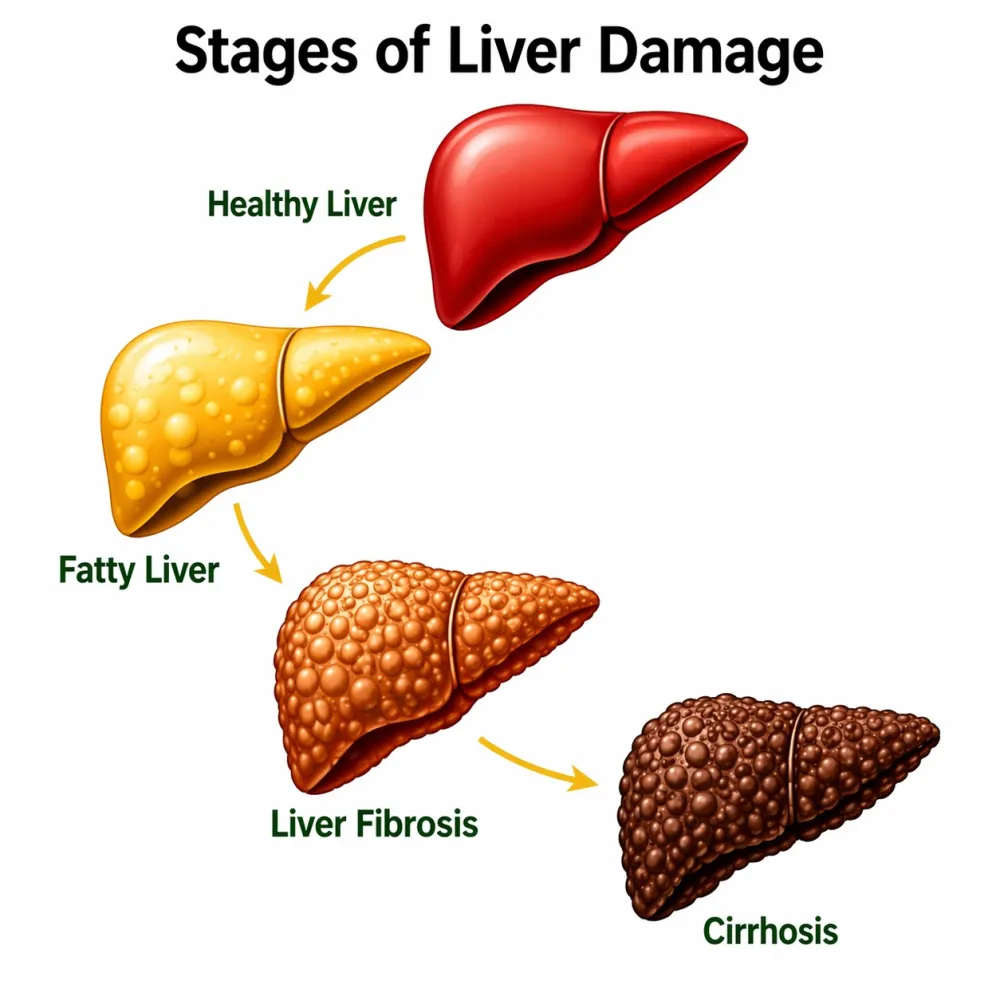
Cirrhosis moves from compensated (few or no symptoms) through worsening portal hypertension to decompensated cirrhosis, when complications such as ascites, jaundice or bleeding appear, and finally end-stage liver disease, when a liver transplant may be needed.
Stage by stage
Stage 1: Compensated cirrhosis
Mild liver scarring with no noticeable symptoms. The liver still functions relatively well.
Stage 2: Worsening portal hypertension
Increased blood pressure in the liver’s veins causes swelling and digestive discomfort.
Stage 3: Decompensated cirrhosis
Serious complications appear, such as ascites, jaundice and internal bleeding.
Stage 4: End-stage liver disease
Liver function severely declines. Patients may require a liver transplant.
Compensated vs. decompensated cirrhosis
| Feature | Compensated | Decompensated |
|---|---|---|
| Symptoms | Few or none | Obvious and often severe |
| Liver function | Still relatively good | Significantly reduced |
| Complications | Not yet present | Ascites, jaundice, variceal bleeding, hepatic encephalopathy |
| Outlook | Can stabilise or improve when the cause is treated | Transplant evaluation may be considered |
Even with cirrhosis, many people live with compensated cirrhosis for years if they follow a treatment plan that helps prevent the liver from decompensating. Clinically significant ascites is an important sign of decompensation — read our guide to ascites and liver cirrhosis.
How doctors measure severity
Alongside clinical signs, doctors use laboratory-based scores. The MELD 3.0 score combines bilirubin, creatinine, INR, sodium, albumin and sex to predict short-term risk and prioritise patients on the liver transplant waiting list. You can estimate a MELD 3.0 score with our calculator.
What comes next: treatment
Cirrhosis cannot be cured, but treatment can slow progression and manage complications at every stage. Explore treatment and management options.